


AERIAL THERAPY


Health In The Air
Aerial Arts exists at the intersection of art, athletics, exercise, dance, and performance. It can be as simple as a yoga practice people attend for stretching and decompression, or as complex as a circus that professionals perform at an elite level in large stadiums worldwide. For example, it could be a sling in a yoga studio used to suspend individuals upside down in a supported frog pose, creating a stretch and spinal decompression not achievable any other way. Or it could be two large straps, hanging from a Cirque du Soleil stadium ceiling, used to propel aerialists to fly across the air, doing flips and catching each other at great heights as a professional aerial performance. The variety of aerial interpretation is wide, but all aerial improves health in unique ways.

Aerial movement originated in circuses that blended Chinese acrobatics from over 2,000 years ago with European circus traditions in the 18th and19th centuries (The Peking Acrobats 2015, History Today 2010); together, they evolved into modern aerial disciplines, where aerial can be performed as a separate sport. Aerial offers unique studios, performances, and classes focused solely on the airborne movement discipline, including structured training environments and dedicated communities. It transformed from a sport that requires only simple or “traditional” movements to a broader environment where a wide range of apparatuses are introduced, and the moves can be not only more complicated but also more creative, expressive, and artistically driven.
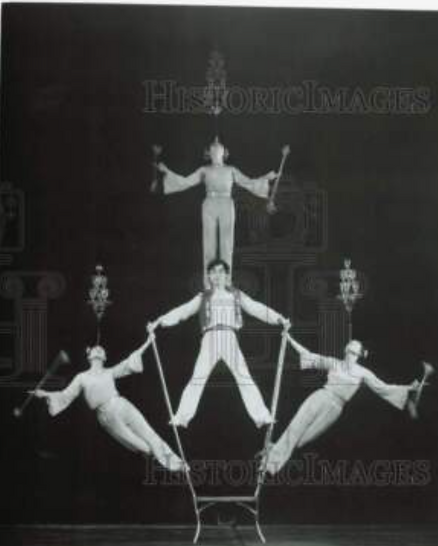

Doing Aerial can be a collaborative skill that builds community, as many of the moves require great amounts of trust and mutual support to ensure safety and prevent injury through communication and interdependence. Aerial is also a female-dominated sport, which is uncommon among strength-based disciplines, underscoring the importance of getting more research and information about it out. Male-dominated mainstream sports like soccer, football, and basketball are usually given much more attention in funding, media coverage, and research than those in which women tend to excel, such as rhythmic gymnastics, netball, synchronized skating, aerials, or swimming. Because of the unequal attention, female dominated sports need to be more visible, better studied, and more publicly recognized. Representation and visibility are essential for legitimacy, research investment, and long-term recognition. “Historically, the female aerialists' muscularity challenged traditional stereotypes of female inferiority, displaying nuanced representations of femininity.”(Watt, 2022).


Aerial Arts are uncommon, it is underresearched and often overlooked for its health benefits and creative potential (Kosma, et al). There have been many physical benefits proven with Aerial Arts; for example, many of the moves allow you to stretch parts of your body as simply as stretching your back from backpack pose to hyper leg extensions in split poses. Not only is aerial for stretching, but it also improves core strength and focus on how you maneuver your body, allowing you to do things like hang by one arm with ease. The vestibular response to swinging on aerial silks or a sling reduces stress, creates pain relief, improves mood, and enhances coordination, which can be both mentally stimulating and physically stimulating for the body (Kumar et al.).
Testimonials and visuals
Marietta Walsh
"At 57 years old, I am definitely one of the older folks taking aerial classes, and my message would be-anyone can do it! You don't have to be super-strong or super-bendy, but aerial will definitely make you stronger and more flexible, and it will improve things like grip strength and balance. All things that become more important as we age! The first picture is my split from when I started aerial in 2023. The second is from late last year.
I would also say that aerial is good for you and, really, REALLY fun! How many things can you say that about!"


Sara Elisa
"Starting aerial in my early 40s has been both incredibly rewarding and insanely challenging. I quickly realised that my strong awareness of my body and space(thanks to my dance and yoga experience) did not translate to being upside down,and I had almost zero tolerance for spinning. Working and overcoming these challenges has been frustrating, but it has also led me to feel the strongest and most capable I have in a long time. I have met some incredible people along the way and truly feel a sense of community when I attend classes!"


Sophia Taylor
contributed photos and videos to the websight


Willa KrusKamp
contributed photos and videos to the website

Myka Evans
contributed photos to the website


